
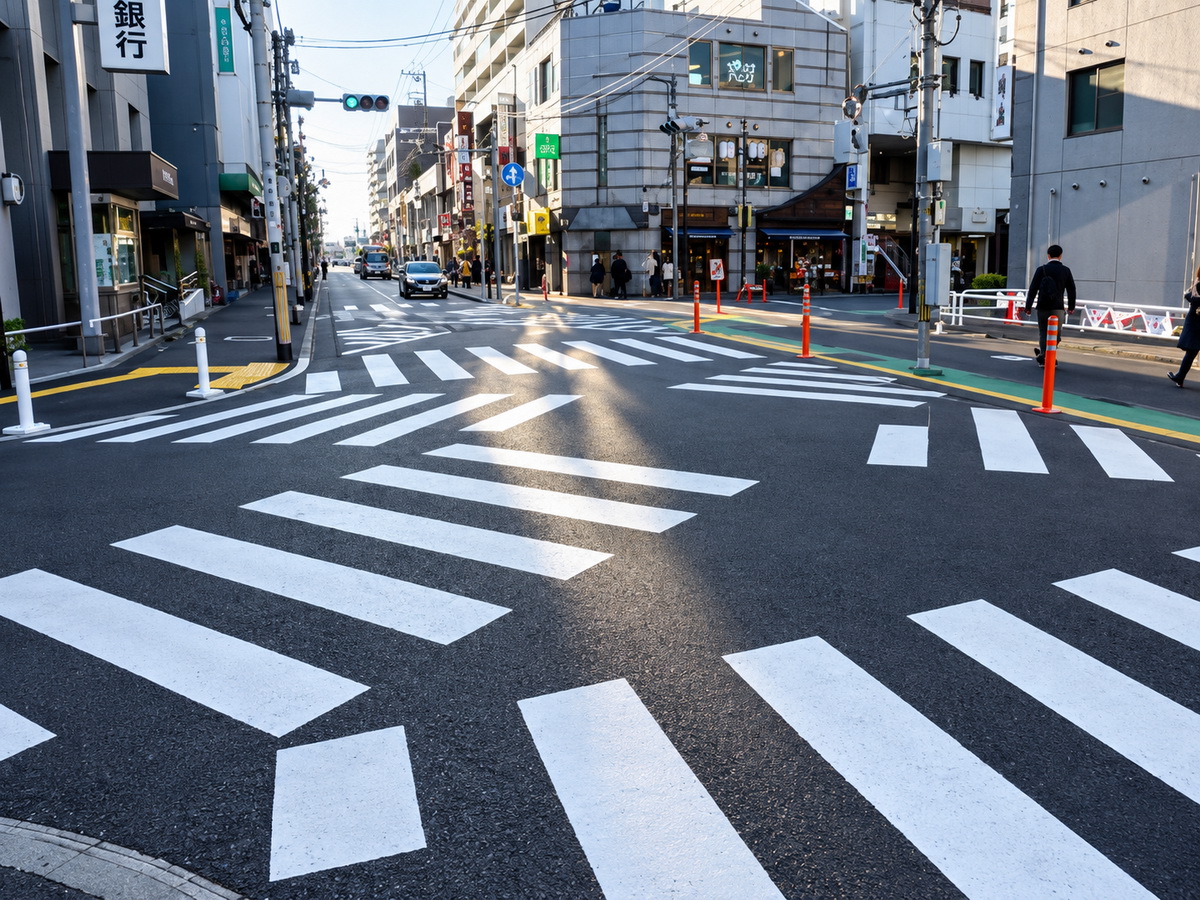
For Smombie Assistant to warn a pedestrian about a danger ahead, the smartphone first needs to understand what is in front of it. However, it is not necessary to recognize every object in the surrounding environment. The Smombie Assistant concept proposes using existing elements of pedestrian infrastructure as specific danger signs. These are primarily yellow tactile surfaces and yellow warning lines, which are installed near areas and objects that require increased attention. Therefore, recognition of these signs can be divided into two consecutive tasks: first, detecting the presence of yellow and its nearby shades, and then checking whether the detected object corresponds to a specific geometric shape.
Color filtering

The first stage of recognition is searching for the yellow color. The smartphone camera captures the area in front of the pedestrian, after which the system identifies areas whose color corresponds to yellow and its closest shades. At this stage, it does not matter what exactly is in front of the camera. It could be a yellow warning line, tactile paving, or an ordinary yellow object that has nothing to do with danger. The task of the first stage is only to significantly narrow down the search area.
After identifying the yellow color, the system no longer needs to analyze the entire image. It continues working only with the detected areas. This makes it possible to move to the next stage and check whether the detected yellow object has the characteristics of a warning sign. This order is important because there can be many yellow objects around a pedestrian, but not every one of them is a danger signal.
This is why color recognition alone is not enough. Yellow is only the first feature that draws the system's attention to a particular area of the image. To make a decision, it is also necessary to determine its shape and position.
Geometric recognition

At the second stage, the system analyzes the shape of the highlighted yellow area. The main focus is on horizontal lines and their arrangement. Tactile paving can also meet this criterion when it is laid in a row. A characteristic feature of a warning object may be two parallel lines whose length is greater than the distance between them. This combination of features can help distinguish a potential warning object from the many other lines and elements found on roads, sidewalks, or other surfaces.
Checking color and shape sequentially helps reduce false detections. If a yellow object is detected in front of the pedestrian but its shape does not match the specified characteristics, it is not considered a warning sign. If both main characteristics match – the appropriate color and the characteristic geometry – the system has a basis to consider the detected object a potential danger signal and pass this information to the warning module.
This approach makes it possible to gradually increase the complexity of recognition. First, the system asks a simple question: “Is there a yellow object ahead?” Then it asks the next question: “Does its shape match the characteristics of a warning object?” Only after receiving a positive answer to both questions can a warning be generated for the pedestrian.
Conclusion

The main advantage of this approach is that Smombie Assistant does not need to analyze the entire surrounding environment in search of every possible danger. The system focuses on specific features – yellow color and a particular geometric shape – and uses existing elements of urban infrastructure for this purpose. This significantly simplifies the recognition task, makes it possible to reduce image processing time, and decreases the computing power required from the smartphone. In addition, there is no need to create a separate warning-sign system specifically for smartphone zombies. Existing yellow tactile surfaces and warning lines can continue to serve their traditional purpose for visually impaired and blind pedestrians while also becoming visual reference points for Smombie Assistant.