
Today, Android protects the device, the user's data, and digital identity, but it provides very little protection for the person themselves while they are using a smartphone. The development of artificial intelligence, geolocation services, and context-aware analysis opens the possibility of a new generation of Android features focused on protecting people in the real world.
The Smombie Assistant module could be not only a personal safety feature for users who use their smartphones while walking, but also a transmitter of a unique set of data about pedestrian behavior and potentially dangerous areas of urban infrastructure.

Unlike cars, which have long been a source of telemetry for manufacturers and city services, pedestrians hardly participate in creating a digital picture of urban safety. Today, cities receive information from traffic cameras, traffic lights, traffic sensors, and vehicles, but have very little data about where and how risks arise for people walking with their smartphones turned on.
The SmombieNET system could change this situation. Every time the Smombie Assistant module detects tactile warning tiles, a yellow warning line, or another dangerous area and alerts the pedestrian, an event would be recorded. Without transmitting photos, videos, or personal data, the smartphone would send only anonymized information about the time of the event, the event type, the pedestrian's movement speed, and their location to the SmombieNET system.
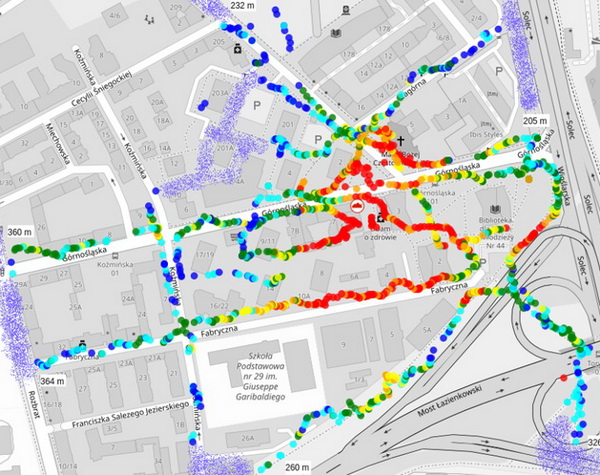
Based on millions of such events, Google could create a map of risks and dangerous areas within urban infrastructure. It could help identify locations where smartphone users regularly find themselves in potentially dangerous situations.
Mobile network operators could use this information to develop their own services and new digital safety initiatives, as well as to cooperate with municipalities and other participants in urban infrastructure.
Smartphone manufacturers could improve system safety features, develop context-aware warnings and new solutions for pedestrians, and evaluate the effectiveness of technologies that have already been implemented based on users' real-world behavior.
Municipalities could use this information when modernizing urban infrastructure and planning measures to improve pedestrian safety, as well as identify infrastructure deficiencies.
Transport services could analyze the effectiveness of pedestrian crossings and transit stops, address traffic organization issues, and identify areas with insufficient visibility.
Research organizations would have the opportunity to study the impact of digital devices on the safety of the urban environment using real-world data rather than relying only on surveys and accident statistics.

The SmombieNET system could become another source of competitive advantage for companies in any of the areas mentioned above. Today, companies are actively developing features for detecting accidents, user falls, and monitoring health. The SmombieNET digital platform could add a new category to this list — pedestrian protection. At the same time, the accumulated statistics would allow companies to better understand users' real-world behavior and the effectiveness of implemented safety features.
In the future, the SmombieNET system could become the world's largest platform for analyzing pedestrian safety or complement existing platforms. If today companies such as Google, Samsung, Apple, Xiaomi, and others can help people use smartphones more safely, tomorrow they could help cities become safer for millions of pedestrians.